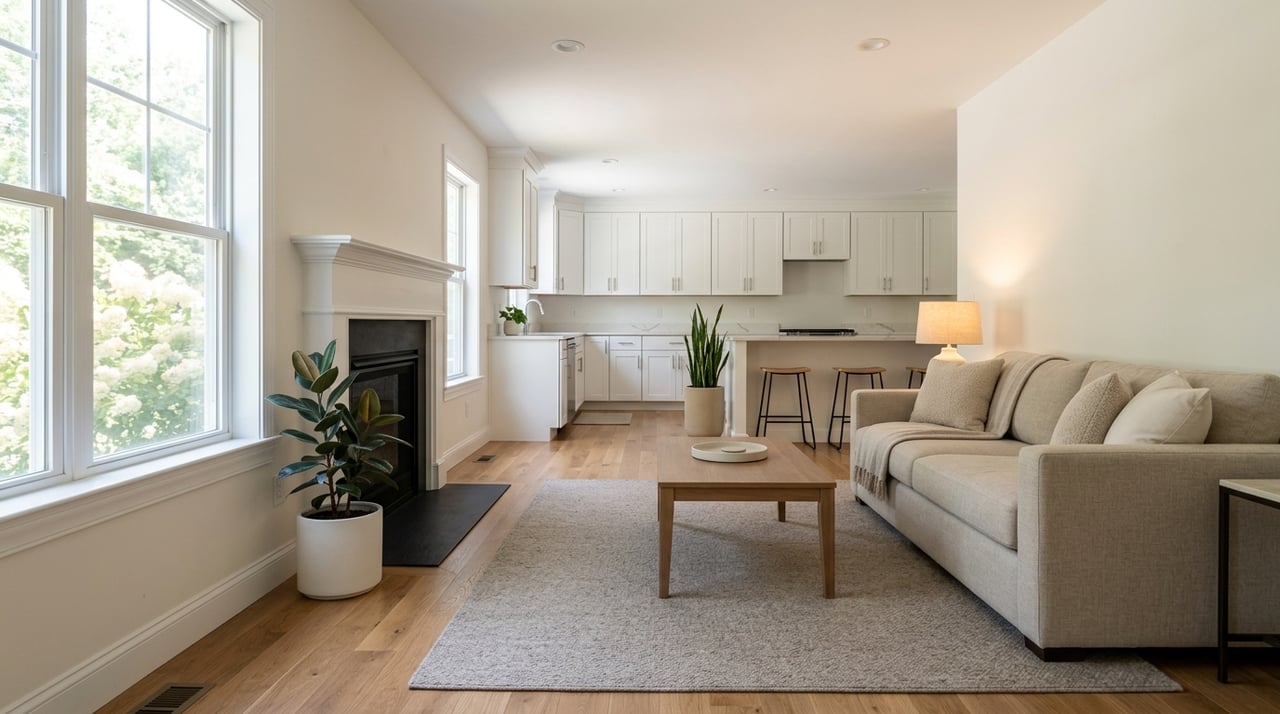
If you are getting ready to sell your Swedesboro home, the way it looks online and in person can shape how quickly buyers decide to act. In Gloucester County, homes were selling after a median of 25 days and 55% sold above list price over the three months ending May 2026, which means buyers are moving, comparing, and reacting fast. The good news is that you do not need a full renovation to make a strong impression. With the right prep and staging plan, you can help your home feel cleaner, brighter, and easier for buyers to picture as their next move. Let’s dive in.
Why staging matters in Swedesboro
Swedesboro is a small Gloucester County community with a largely owner-occupied housing base and a high share of single-unit homes. In a market like that, many buyers are looking for a home that feels functional, well cared for, and easy to move into.
That first impression often happens online. In NAR’s 2024 survey, 41% of buyers first looked online for properties, and photos were the most useful feature for 66% of buyers overall and 85% to 88% of buyers ages 25 to 43. That means your prep work is not just about showings. It is about helping your home stand out the moment buyers start scrolling.
Staging also has measurable value. According to NAR’s 2023 Profile of Home Staging, 81% of buyers’ agents said staging made it easier for buyers to visualize a property as a future home, and 40% said buyers were more willing to walk through a home they saw online. Even more importantly, 20% said staging increased the dollar value offered by 1% to 5% compared with similar unstaged homes.
Start with the right prep order
Before you think about décor, focus on the sequence. For most Swedesboro sellers, the smartest low-cost order is declutter first, deep clean second, make small repairs third, then stage and photograph.
This order works because clutter hides space, dirt makes buyers question maintenance, and little unfinished items can distract from the parts of the home you want buyers to notice. Once those basics are done, staging feels more natural and your photos will look sharper.
Here is a simple prep checklist to follow:
- Remove items you do not use every day
- Deep clean floors, counters, windows, kitchens, and baths
- Patch small wall marks and touch up paint where needed
- Replace burned-out bulbs and make sure lights work
- Fix loose handles, squeaky doors, and visible minor issues
- Organize closets, cabinets, laundry areas, and garage storage
- Stage key rooms before photography and showings
Focus on the spaces buyers notice most
If your time or budget is limited, do not try to perfect every corner of the house at once. NAR’s staging data shows the rooms that matter most in buyer perception.
The living room ranked as the top staging priority, with 39% of buyers’ agents naming it the most important room to stage. After that came the primary bedroom at 36% and the kitchen at 30%. Sellers’ agents also most often staged the living room, kitchen, primary bedroom, and dining room.
For many Swedesboro homes, that means your highest-return staging targets are:
- Front exterior and entry
- Living room
- Kitchen
- Dining area
- Primary bedroom
- Bathrooms
If those spaces look clean, bright, and easy to understand, the rest of the home tends to feel stronger too.
Improve curb appeal and entry
Your first showing starts before a buyer opens the front door. A clean outside approach helps your home feel inviting in both listing photos and in-person tours.
For a Swedesboro listing, that usually means trimmed landscaping, cleared walkways, working exterior lights, and a front door that looks neat and photographs well. If you have a porch or small front sitting area, keep it simple so the entry feels open.
Use this exterior checklist:
- Sweep porch and walkway
- Remove dead plants and yard clutter
- Trim bushes and edge grass if needed
- Clean the front door and hardware
- Add a fresh doormat if the current one looks worn
- Make sure house numbers and lights are easy to see
Stage the living room for space and flow
The living room does a lot of heavy lifting because buyers often use it to judge the size, comfort, and layout of the home. If it feels crowded or dark, the whole house can feel smaller.
Remove excess furniture and create one clear seating area. Hide cords, pet items, and small accessories that break up the room visually. The goal is not to make the room look empty. It is to make the room feel easy to move through.
Natural light matters here. Open blinds, pull back curtains, and use lamps where needed so the room reads bright in photos and during showings.
Clean up the kitchen and define dining space
Kitchens and dining areas carry a lot of weight in listing presentation. Buyers tend to notice clutter fast, especially in photos viewed on a phone.
Clear off most countertop appliances, remove papers and magnets from the fridge, and deep clean surfaces until the room feels crisp. If you have a dining area, make sure it is obvious and functional. Buyers should be able to understand where a table fits and how traffic moves around it.
A few simple changes usually help the most:
- Leave only a small number of countertop items out
- Clear sink areas completely before photos
- Wipe down cabinet fronts and stainless surfaces
- Set the table simply if it helps define the space
- Remove bulky pieces that block walkways
Make bedrooms feel calm and neutral
Primary bedrooms are a key decision point for many buyers. They do not need luxury styling, but they do need to feel restful, clean, and easy to picture as their own.
Use neutral bedding, make the bed neatly, and simplify nightstands. NAR notes common bedroom turnoffs like messy closets, poor lighting, weak artwork, and visible pet beds or crates. That means closets matter almost as much as the room itself.
If your bedroom furniture is oversized, consider removing a piece or two before photos. A room that feels open usually shows better than one that feels fully furnished but tight.
Brighten bathrooms and remove personal items
Bathrooms should feel fresh, simple, and easy to maintain. Buyers notice cleanliness here quickly, so deep cleaning is one of the best things you can do.
Strip away excess toiletries, clean mirrors and shower surfaces, and keep counters as clear as possible. Fresh towels, good lighting, and tidy storage usually make a bigger difference than decorative extras.
If you have multiple bathrooms, stage all of them to the same standard. Consistency helps the whole home feel more polished.
Give flexible rooms a clear purpose
Buyers value detailed property information, floor plans, and room function. If you have a spare room, loft, finished basement corner, or small bonus area, avoid letting it read like storage overflow.
Instead, give each extra space a job. A small room can read as a home office, guest room, or study nook. A finished lower level can show as recreation space or flexible living space, as long as the layout is clear.
This matters because current buyer trends include both downsizers and move-up households, and some buyers are also looking for multigenerational flexibility. Clear room purpose helps more buyers see how the home could work for their needs.
Do not ignore storage areas
Closets, basements, laundry rooms, and garages may not be the headline spaces, but they still shape how buyers judge the home. If these areas look packed, buyers may assume the home lacks storage.
You do not need to empty them completely. You just need to make them look organized and usable. Leave enough open space so buyers can tell there is room for their things too.
A good rule is to reduce visible contents, group similar items together, and keep floors as open as possible. Simple organization signals care and makes the home feel more functional.
Consider virtual staging carefully
If your home is vacant, virtual staging can help listing photos feel more complete and can encourage showings. It can be especially useful for helping buyers understand room scale and possible furniture placement.
That said, NAR cautions that buyers may have a harder time envisioning the space during an in-person tour if the furniture is only shown in photos. If you go this route, the strategy should still keep the real-life showing experience in mind.
In some cases, a few real pieces of furniture in the main rooms may do a better job bridging the gap between online interest and the in-person walk-through.
Avoid the most common staging mistakes
Some of the biggest staging mistakes are not expensive problems. They are usually small choices that add visual noise or make a room feel harder to read.
The most common issues include:
- Too much furniture
- Overly personal décor
- Messy closets and storage areas
- Weak lighting
- Countertop clutter
- Fridge papers and magnets
- Visible pet beds, crates, or feeding areas
- Rooms without a clear purpose
When in doubt, edit more than you decorate. Buyers tend to respond better to open space, good light, and clean surfaces than to heavy styling.
Plan your budget around impact
Staging does not have to mean a major spend. NAR reported a median staging-service spend of $600, which gives you a useful benchmark if you are trying to decide how far to go.
If your budget is tight, put your money and energy into the spaces that shape first impressions most. In many Swedesboro homes, that means the front exterior, living room, kitchen, dining area, and primary bedroom.
That approach helps you improve the spaces buyers notice first online and remember most after a showing. It is a practical strategy, especially in an active county market where presentation can influence whether buyers book a tour quickly.
Use local context in your listing presentation
Prep and staging are only part of the story. Buyers also value detailed property information and neighborhood context when they search online.
For a Swedesboro home, that means your listing presentation should pair strong photos with clear, accurate local details. Swedesboro is served by the Swedesboro-Woolwich School District for grades PK-6 and the Kingsway Regional School District for grades 7-12, and practical local context can help buyers better understand the location alongside the home itself.
This is where a hyperlocal strategy matters. Clean staging gets attention, but clear presentation helps buyers connect the home to their day-to-day needs and decide whether to schedule a showing.
If you want help building a prep plan, prioritizing updates, and creating a listing strategy that fits the Swedesboro market, connect with Shayden Feret.